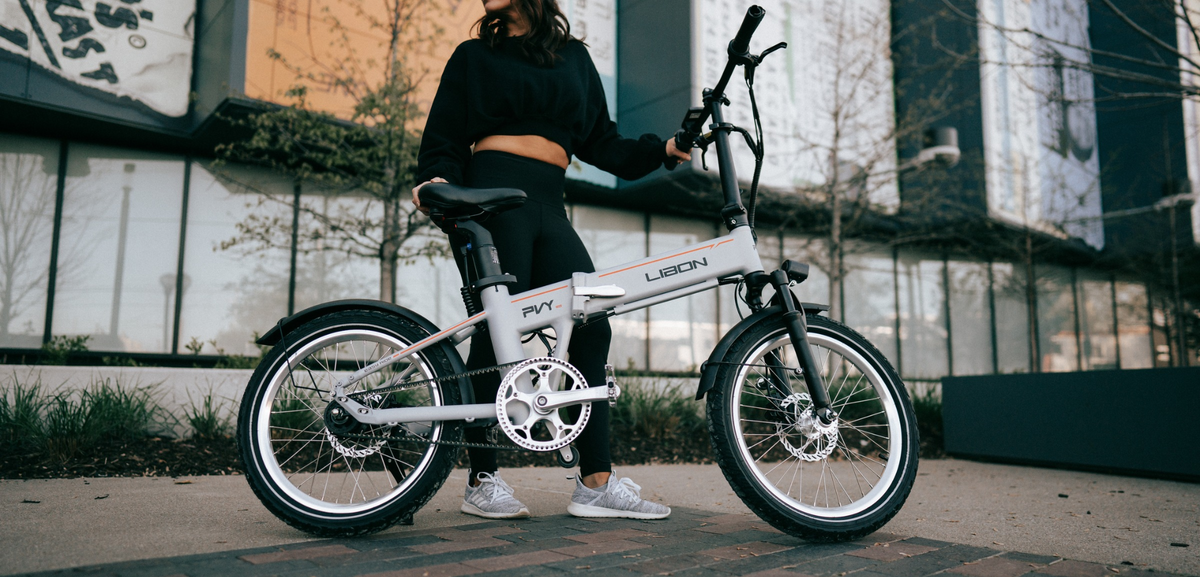
Fat tire e-bikes are built for adventure. With their oversized, grippy rubber and powerful motors, they invite you to explore places a standard bike would struggle to go: gravel paths, forest trails, sandy beaches, and snowy backroads.
But riding on unpaved surfaces isn’t just about having the right bike—it’s about knowing how to use it. Here are practical tips to help you get the most from your fat tire e-bike when the pavement ends.
{"height":8,"color":{"hue":213,"brightness":0.83,"saturation":1,"alpha":0},"hidden":false,"locked":false,"blockName":"Spacer"}
1. Start with the Right Tire Pressure
{"height":8,"color":{"hue":213,"brightness":0.83,"saturation":1,"alpha":0},"hidden":false,"locked":false,"blockName":"Spacer"}
This is the single most important adjustment for unpaved riding.
{"height":8,"color":{"hue":213,"brightness":0.83,"saturation":1,"alpha":0},"hidden":false,"locked":false,"blockName":"Spacer"}
- On pavement: You run higher pressure (15–20 PSI) to reduce rolling resistance.
{"height":8,"color":{"hue":213,"brightness":0.83,"saturation":1,"alpha":0},"hidden":false,"locked":false,"blockName":"Spacer"}
- On soft or loose surfaces: Drop the pressure dramatically—often to 5–10 PSI or even lower.
{"height":8,"color":{"hue":213,"brightness":0.83,"saturation":1,"alpha":0},"hidden":false,"locked":false,"blockName":"Spacer"}
Lower pressure increases the tire’s contact patch, allowing it to “float” over sand, mud, or gravel rather than digging in. It also adds suspension, smoothing out bumps and roots.
{"height":8,"color":{"hue":213,"brightness":0.83,"saturation":1,"alpha":0},"hidden":false,"locked":false,"blockName":"Spacer"}
Pro tip: Carry a small digital gauge and a portable pump. You’ll want to adjust pressure based on the terrain you encounter.
{"height":8,"color":{"hue":213,"brightness":0.83,"saturation":1,"alpha":0},"hidden":false,"locked":false,"blockName":"Spacer"}
2. Shift Your Body Position
{"height":8,"color":{"hue":213,"brightness":0.83,"saturation":1,"alpha":0},"hidden":false,"locked":false,"blockName":"Spacer"}
Your body is part of the suspension system. On unpaved roads, use it.
{"height":8,"color":{"hue":213,"brightness":0.83,"saturation":1,"alpha":0},"hidden":false,"locked":false,"blockName":"Spacer"}
- Stand on the pedals when approaching rough sections. Keep your knees and elbows loose—they act as shock absorbers.
{"height":8,"color":{"hue":213,"brightness":0.83,"saturation":1,"alpha":0},"hidden":false,"locked":false,"blockName":"Spacer"}
- Shift your weight back when descending or riding through loose sand/gravel. This keeps the front wheel light and prevents it from digging in.
{"height":8,"color":{"hue":213,"brightness":0.83,"saturation":1,"alpha":0},"hidden":false,"locked":false,"blockName":"Spacer"}
- Lean forward slightly when climbing steep, loose grades to maintain front-wheel traction.
{"height":8,"color":{"hue":213,"brightness":0.83,"saturation":1,"alpha":0},"hidden":false,"locked":false,"blockName":"Spacer"}
Think of your bike as an extension of your body. Stay fluid, not rigid.
{"height":8,"color":{"hue":213,"brightness":0.83,"saturation":1,"alpha":0},"hidden":false,"locked":false,"blockName":"Spacer"}
3. Use the Motor Wisely
{"height":8,"color":{"hue":213,"brightness":0.83,"saturation":1,"alpha":0},"hidden":false,"locked":false,"blockName":"Spacer"}
Fat tire e-bikes often have powerful motors (like the PVY Z20 PLUS with its 1000W peak output). On unpaved terrain, throttle and assist need a light touch.
{"height":8,"color":{"hue":213,"brightness":0.83,"saturation":1,"alpha":0},"hidden":false,"locked":false,"blockName":"Spacer"}
- On loose climbs: Use a steady, moderate pedal assist rather than punching the throttle. Too much sudden power will spin the rear tire, digging a hole.
{"height":8,"color":{"hue":213,"brightness":0.83,"saturation":1,"alpha":0},"hidden":false,"locked":false,"blockName":"Spacer"}
- On descents: Consider turning assist down or off. The extra weight of an e-bike carries momentum well—you may not need motor help, and it can make steering feel less predictable.
{"height":8,"color":{"hue":213,"brightness":0.83,"saturation":1,"alpha":0},"hidden":false,"locked":false,"blockName":"Spacer"}
- On flat dirt or gravel: Mid-level assist lets you cruise comfortably without overwhelming traction.
{"height":8,"color":{"hue":213,"brightness":0.83,"saturation":1,"alpha":0},"hidden":false,"locked":false,"blockName":"Spacer"}
4. Read the Terrain Ahead
{"height":8,"color":{"hue":213,"brightness":0.83,"saturation":1,"alpha":0},"hidden":false,"locked":false,"blockName":"Spacer"}
Unpaved roads hide surprises: washboards, loose rocks, hidden roots, and soft patches.
{"height":8,"color":{"hue":213,"brightness":0.83,"saturation":1,"alpha":0},"hidden":false,"locked":false,"blockName":"Spacer"}
- Keep your eyes 10–20 feet ahead, scanning for changes in surface texture.
{"height":8,"color":{"hue":213,"brightness":0.83,"saturation":1,"alpha":0},"hidden":false,"locked":false,"blockName":"Spacer"}
- When you see a rough patch, stand and relax your grip—let the bike move beneath you.
{"height":8,"color":{"hue":213,"brightness":0.83,"saturation":1,"alpha":0},"hidden":false,"locked":false,"blockName":"Spacer"}
- For deep sand or mud, maintain steady momentum. Stopping or slowing too much can cause you to sink.
{"height":8,"color":{"hue":213,"brightness":0.83,"saturation":1,"alpha":0},"hidden":false,"locked":false,"blockName":"Spacer"}
{"height":8,"color":{"hue":213,"brightness":0.83,"saturation":1,"alpha":0},"hidden":false,"locked":false,"blockName":"Spacer"}
5. Master the Brakes (Carefully)
{"height":8,"color":{"hue":213,"brightness":0.83,"saturation":1,"alpha":0},"hidden":false,"locked":false,"blockName":"Spacer"}
Stopping on loose surfaces is different than on pavement.
{"height":8,"color":{"hue":213,"brightness":0.83,"saturation":1,"alpha":0},"hidden":false,"locked":false,"blockName":"Spacer"}
- Use both brakes but modulate gently. Gravel and sand offer less grip; grab a handful of front brake and the front wheel may wash out.
{"height":8,"color":{"hue":213,"brightness":0.83,"saturation":1,"alpha":0},"hidden":false,"locked":false,"blockName":"Spacer"}
- Brake before turns, not during. Slow to a comfortable speed, then release brakes as you enter the corner.
{"height":8,"color":{"hue":213,"brightness":0.83,"saturation":1,"alpha":0},"hidden":false,"locked":false,"blockName":"Spacer"}
- On steep descents, feather the brakes intermittently rather than dragging them constantly—this prevents heat fade and maintains control.
{"height":8,"color":{"hue":213,"brightness":0.83,"saturation":1,"alpha":0},"hidden":false,"locked":false,"blockName":"Spacer"}
6. Choose Your Line
{"height":8,"color":{"hue":213,"brightness":0.83,"saturation":1,"alpha":0},"hidden":false,"locked":false,"blockName":"Spacer"}
On a paved road, you follow the lane. On unpaved roads, you choose your path.
{"height":8,"color":{"hue":213,"brightness":0.83,"saturation":1,"alpha":0},"hidden":false,"locked":false,"blockName":"Spacer"}
- Look for the firmest surface: packed dirt, small gravel, or compacted sand.
{"height":8,"color":{"hue":213,"brightness":0.83,"saturation":1,"alpha":0},"hidden":false,"locked":false,"blockName":"Spacer"}
- Avoid riding in the center of a two-track road where loose material collects. Instead, follow the tire tracks.
{"height":8,"color":{"hue":213,"brightness":0.83,"saturation":1,"alpha":0},"hidden":false,"locked":false,"blockName":"Spacer"}
- For corners, enter wide, apex late, and exit smooth—just like on a dirt bike.
{"height":8,"color":{"hue":213,"brightness":0.83,"saturation":1,"alpha":0},"hidden":false,"locked":false,"blockName":"Spacer"}
7. Dress for the Environment
{"height":8,"color":{"hue":213,"brightness":0.83,"saturation":1,"alpha":0},"hidden":false,"locked":false,"blockName":"Spacer"}
Unpaved riding means more dust, mud, and potential for branches or brush.
{"height":8,"color":{"hue":213,"brightness":0.83,"saturation":1,"alpha":0},"hidden":false,"locked":false,"blockName":"Spacer"}
- Wear eye protection (clear or tinted) to keep dust and debris out.
{"height":8,"color":{"hue":213,"brightness":0.83,"saturation":1,"alpha":0},"hidden":false,"locked":false,"blockName":"Spacer"}
- A helmet with a visor helps shade your eyes and deflect low-hanging branches.
{"height":8,"color":{"hue":213,"brightness":0.83,"saturation":1,"alpha":0},"hidden":false,"locked":false,"blockName":"Spacer"}
- Consider gloves with good grip—fat tire e-bikes can transmit more vibration through the bars.
{"height":8,"color":{"hue":213,"brightness":0.83,"saturation":1,"alpha":0},"hidden":false,"locked":false,"blockName":"Spacer"}
8. Bring Essentials for the Trail
{"height":8,"color":{"hue":213,"brightness":0.83,"saturation":1,"alpha":0},"hidden":false,"locked":false,"blockName":"Spacer"}
A flat or mechanical issue is more complicated on a remote dirt road.
{"height":8,"color":{"hue":213,"brightness":0.83,"saturation":1,"alpha":0},"hidden":false,"locked":false,"blockName":"Spacer"}
Pack:
{"height":8,"color":{"hue":213,"brightness":0.83,"saturation":1,"alpha":0},"hidden":false,"locked":false,"blockName":"Spacer"}
- Spare tube (or patch kit) and tire levers
{"height":8,"color":{"hue":213,"brightness":0.83,"saturation":1,"alpha":0},"hidden":false,"locked":false,"blockName":"Spacer"}
- Mini pump or CO₂ inflator
{"height":8,"color":{"hue":213,"brightness":0.83,"saturation":1,"alpha":0},"hidden":false,"locked":false,"blockName":"Spacer"}
- Multi-tool with hex keys
{"height":8,"color":{"hue":213,"brightness":0.83,"saturation":1,"alpha":0},"hidden":false,"locked":false,"blockName":"Spacer"}
- Water and a snack
{"height":8,"color":{"hue":213,"brightness":0.83,"saturation":1,"alpha":0},"hidden":false,"locked":false,"blockName":"Spacer"}
- A phone and basic first aid kit
{"height":8,"color":{"hue":213,"brightness":0.83,"saturation":1,"alpha":0},"hidden":false,"locked":false,"blockName":"Spacer"}
Fat tires are tough, but sharp rocks or thorns can still find their mark.
{"height":8,"color":{"hue":213,"brightness":0.83,"saturation":1,"alpha":0},"hidden":false,"locked":false,"blockName":"Spacer"}
{"height":8,"color":{"hue":213,"brightness":0.83,"saturation":1,"alpha":0},"hidden":false,"locked":false,"blockName":"Spacer"}
9. Know Your Bike’s Capabilities
{"height":8,"color":{"hue":213,"brightness":0.83,"saturation":1,"alpha":0},"hidden":false,"locked":false,"blockName":"Spacer"}
Not all fat tire e-bikes are created equal. Understand your model’s strengths.
{"height":8,"color":{"hue":213,"brightness":0.83,"saturation":1,"alpha":0},"hidden":false,"locked":false,"blockName":"Spacer"}
- The PVY Z20 PLUS, with its 100 Nm torque and 20×4.0-inch tires, excels in loose sand, snow, and moderate trails.
{"height":8,"color":{"hue":213,"brightness":0.83,"saturation":1,"alpha":0},"hidden":false,"locked":false,"blockName":"Spacer"}
Match your expectations to the bike. Even a capable fat tire e-bike isn’t a full-suspension mountain bike for extreme downhill, but it will handle most gravel, fire roads, and gentle singletrack with ease.
{"height":8,"color":{"hue":213,"brightness":0.83,"saturation":1,"alpha":0},"hidden":false,"locked":false,"blockName":"Spacer"}
10. Respect the Environment
{"height":8,"color":{"hue":213,"brightness":0.83,"saturation":1,"alpha":0},"hidden":false,"locked":false,"blockName":"Spacer"}
Unpaved roads often pass through sensitive natural areas.
{"height":8,"color":{"hue":213,"brightness":0.83,"saturation":1,"alpha":0},"hidden":false,"locked":false,"blockName":"Spacer"}
- Stay on designated trails to avoid damaging vegetation.
{"height":8,"color":{"hue":213,"brightness":0.83,"saturation":1,"alpha":0},"hidden":false,"locked":false,"blockName":"Spacer"}
- Avoid riding in wet conditions that cause deep ruts—it damages the trail and your experience.
{"height":8,"color":{"hue":213,"brightness":0.83,"saturation":1,"alpha":0},"hidden":false,"locked":false,"blockName":"Spacer"}
- Pack out everything you pack in.
{"height":8,"color":{"hue":213,"brightness":0.83,"saturation":1,"alpha":0},"hidden":false,"locked":false,"blockName":"Spacer"}
Final Thoughts: Confidence Comes with Practice
{"height":8,"color":{"hue":213,"brightness":0.83,"saturation":1,"alpha":0},"hidden":false,"locked":false,"blockName":"Spacer"}
Riding a fat tire e-bike on unpaved roads is a skill that grows with experience. Start on easy gravel paths, then work up to looser terrain. Each ride teaches you how your bike responds, how to read the surface, and how to move with the bike rather than fighting it.
{"height":8,"color":{"hue":213,"brightness":0.83,"saturation":1,"alpha":0},"hidden":false,"locked":false,"blockName":"Spacer"}
With the right pressure, position, and a little patience, you’ll soon be exploring places you never thought a bicycle could go—and having a great time doing it.